


Before I Met the Champion - The Story Behind Man Enough to Care
Updated: Jul 9

Choosing the Journey
Between April and the end of June, I had the privilege of taking part in the 10-week Digital Storytelling for Social Change Minor at Stenden South Africa as part of my BCom Hospitality Management degree. As the only South African student in a group of students from across Europe, I had the opportunity to learn alongside them while partnering with community organisations in and around Port Alfred.
Each student selected one of three community projects introduced through the Port Alfred campus. Out of the three, I chose Ezibeleni HCBC's Men Championing for Change programme. Looking back now, I realize I wasn't simply choosing a documentary. I was choosing a journey.
The Men Championing for Change programme, developed by the South African Department of Social Development and implemented locally by Ezibeleni HCBC in Nemato, works with men to become positive role models within their families and communities. It encourages men to protect, respect and heal their communities without causing harm. One part of the programme that immediately resonated with me is called The Father's Legacy.
It invites men to reflect on the lessons they inherited from the fathers and father figures in their lives, what they choose to carry forward, what they choose to change, and the legacy they hope to leave for the next generation.
Those questions stayed with me from the very beginning because they are questions that reach far beyond one community. They are questions many of us, regardless of our background, have had to ask ourselves.
Before I Ever Met Him

As we prepared for filming, Simpiwe, the Programme Coordinator at Ezibeleni HCBC, reached out to several men who had completed the programme. He was looking for someone who would be comfortable opening not only his life to a camera, but also his home and his family.
One man said yes and his name was Hosana. Before I ever met him, our first few meetings had to be postponed. Working independently meant I carried every responsibility myself, and with deadlines approaching I started wondering whether I had chosen the right project.
Then I received a message from Hosana.
"If I don't go home to my wife, it means I don't care."
I hadn't even met him yet. When I read those words, my frustration disappeared almost instantly. Hosana wasn't choosing between his family and the documentary. He was living the very values the documentary was meant to explore. Before I had even shaken his hand, he had already shown me what Man Enough to Care looked like.
Looking back now, I smile because I realize the delay I thought was threatening the project was actually introducing me to the story.
Trust Before the Camera

Over the following weeks, Hosana welcomed me into his world. I met his wife, Blossom; his son, Siyakholwa; his father, Father Mdumane, who is over 100 years old; his mentor, Father Gotyi; and many other members of his family and community.
Each person added another layer to the story, helping me understand not only the man Hosana has become, but also the people who helped shape him. What began as a university assignment slowly became something much more personal. I wasn't simply documenting a programme anymore. I was being welcomed into a family's life.
One of the biggest lessons this journey taught me is that documentary filmmaking has very little to do with cameras.
"People don't share their stories because you arrive with a camera. They share them because they trust you."
That trust is a privilege. It cannot be rushed, it cannot be forced and it certainly cannot be staged. Every interview, every conversation and every quiet moment captured on film existed because people chose to trust me with their story.
Although this was my documentary, it was never mine alone. The Minor brought together an incredible group of students from across Europe who, even while creating documentaries of their own, willingly stepped behind my camera whenever I needed another pair of hands. They helped film interviews, carried equipment and encouraged me when deadlines felt overwhelming.
Their generosity reminded me that storytelling is rarely a solo journey. Behind every documentary is a community of people who quietly help bring it to life, often without expecting anything in return.

I will always be grateful for their willingness to become part of a story that wasn't even their own.
I am equally grateful to one of our facilitators, Samantha Davidson Green, Executive Director of Junction Arts & Media in Vermont, USA. Samantha never tried to tell us what story to make. Instead, she taught us to trust the process.
Whenever I found myself worrying about deadlines or wondering whether the story was coming together, her words gently reminded me,
"This is part of the process...give it time. It's going to be okay. The story will reveal itself"
The story didn't reveal itself because I found better interview questions or learnt new editing techniques. It revealed itself because people trusted me enough to let me into their lives. The relationships came first. The documentary simply followed. That lesson is one I will carry with me long after this Minor has come to an end.
Lessons That Stayed with Me
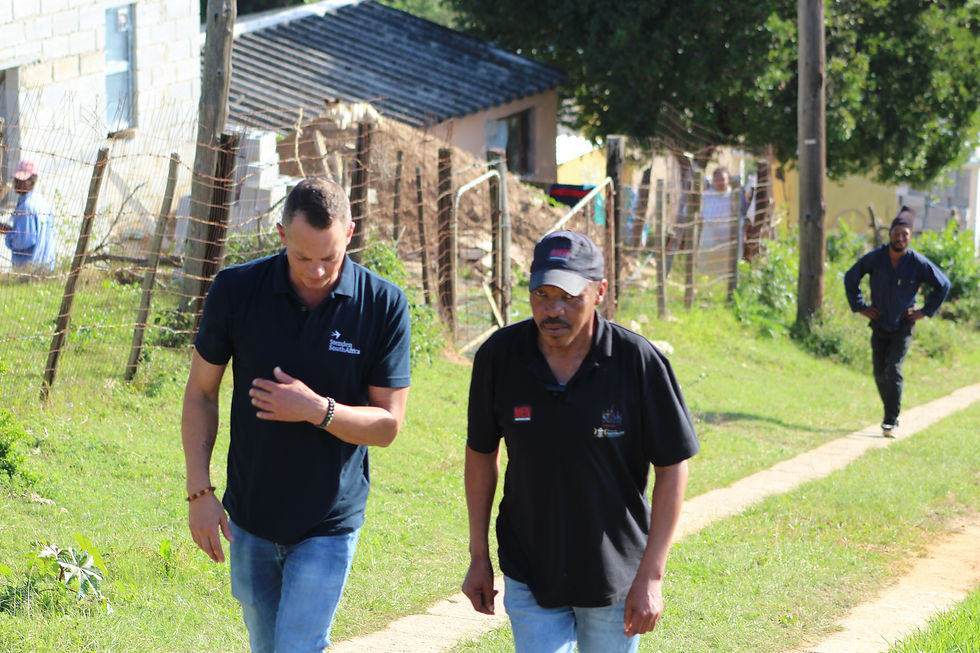
As filming progressed, Hosana often spoke about reflection and introspection. He believes one of the greatest challenges facing many men today is that previous generations were rarely encouraged to stop, look inward and honestly reflect on the men they were becoming.
That message stayed with me long after the interviews had ended.
Another lesson this documentary reminded me of was something I have believed for years yet found myself practicing with renewed intention.
"Listen to understand, not listen to respond."
The more time I spent with Hosana and his family, the less concerned I became with asking the perfect interview question. Instead, I found myself simply listening. Not so I could prepare my next question or think about my response, but to genuinely understand another human being and the experiences that had shaped him.
Somewhere during that process, I realized the documentary wasn't only changing the audience it might one day reach. It was changing me too.
A Dance I'll Never Forget

One of the most memorable moments happened on our final day of filming. I decided there would be no interviews and no questions. I had written an original song called Utata Wam for Hosana's son Siyakolwa and simply wanted us to spend time together.
As we walked, I played the song. Slowly, Hosana and Siyakholwa began moving to the music before breaking into a dance together. Standing behind the camera, I realized I wasn't simply filming a beautiful moment between a father and his son.
I was witnessing the very legacy the documentary had been exploring all along.
One of the greatest challenges wasn't deciding what to film,it was deciding what to leave out. The brief was to tell this story in just eight minutes, which meant many meaningful conversations, relationships and moments had to remain behind the scenes. Perhaps that's why I wanted to write this blog, to share a little more of the journey that couldn't fit into the documentary.
Looking in the Rearview Mirror

One of my favourite photographs from this journey is a simple reflection of myself in a car's rearview mirror. Looking back now, I realize it became the perfect metaphor for the experience.
A rearview mirror isn't there to keep us looking backwards. It reminds us where we've been while helping us move forward. Perhaps that is what reflection really is. It isn't about living in the past. It's about learning from it, understanding it and allowing it to shape the future
More Than One Man's Story

My hope has never been simply to make a documentary. My hope has always been to shine a light on the remarkable work being done through the Men Championing for Change programme. There are countless men quietly choosing every day to protect, respect and heal their families and communities without causing harm.
Man Enough to Care tells one man's story, but it speaks to something much bigger. Through Hosana's journey, we are invited to reflect on our own lives. It asks us what kind of men we are raising, what kind of fathers we are becoming and what legacy we hope to leave behind. Those are not questions that belong only to Hosana or to this programme. They belong to all of us.
"Their stories deserve to be heard because every story has the power to challenge perceptions, inspire reflection and remind us that positive change is already happening in our communities"
When the documentary is released, I invite you to watch it with an open heart. If it resonates with you, I'd be honoured if you shared it. Every conversation it starts helps shine a light on the important work of the Men Championing for Change programme and the men who quietly choose, every day, to make a difference in their families and communities.
The Journey Continues

Thank you for taking the time to read the story behind the documentary.
When you eventually meet Hosana on screen, I hope you'll see more than one man's story. I hope you'll see the quiet strength of choosing care, the importance of reflection, and the difference one person can make simply by living their values every day.
As I look back on this journey, I realise that Hosana and I were walking very different paths yet learning the same lesson. Hosana had the courage to open his home, his family and his story to someone he had never met before. I had to learn to let go of trying to control every part of the documentary and trust that the story would reveal itself in its own time.
Those two journeys met in one simple truth.
"Owning our story and loving ourselves through that process is the bravest thing that we'll ever do." - Brené Brown
Those words have stayed with me throughout this experience. I believe they capture not only Hosana's journey, but my own as well.
Before I leave you, I'd like to share a few words from someone who guided us throughout the Digital Storytelling for Social Change Minor and reminded me, more than once, to trust the process.
Samantha Davidson Green
Executive Director, Junction Arts & Media (Vermont, USA)
"There is holiness in this story and in the manner in which Charles captured it. Hosana's spirit shines from the screen, and the deep human bonds nurtured throughout the process are evident in every frame. This is storytelling that invites reflection, and I hope this won't be Charles's last film."
New to the Journey?
This blog is really the second chapter of a much bigger story.
If you'd like to understand why the Men Championing for Change programme resonated so deeply with me, and why I chose this particular project from the very beginning, I invite you to read my previous blog:
It will give you a deeper understanding of the personal journey that led me to Hosana, and why telling this story became so much more than a university assignment.
Charles Wayne Jacobs - Charlie the "Qwadini"


Comments